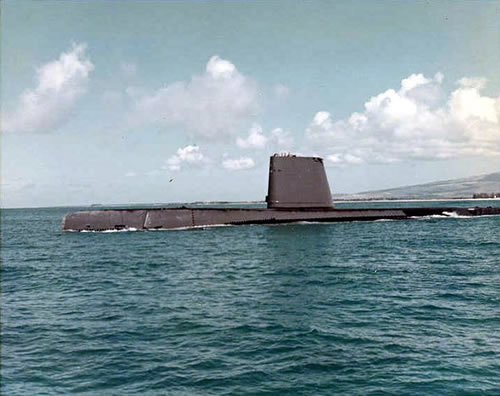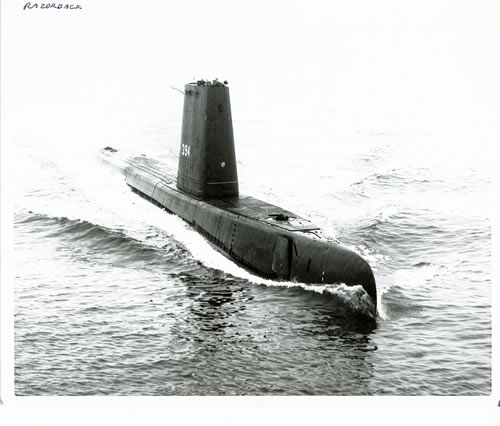
The USS Razorback (SS-394) was a Balao-class submarine that achieved one of the most enduring operational records in United States Navy history. Commissioned in April 1944 during the height of World War II, the vessel was named after the razorback whale. She quickly entered the Pacific theater, conducting five intense combat patrols where she successfully sank multiple Japanese merchant ships and destroyed crucial enemy surface vessels. Demonstrating her versatility, the Razorback also participated in vital lifeguard duties, rescuing downed American aviators from the sea. Her distinguished wartime service culminated in a historic honor: she was present in Tokyo Bay on September 2, 1945, witnessing the formal surrender of the Japanese Empire.
Following World War II, the Razorback was heavily modified under the Greater Underwater Propulsive Power (GUPPY IIA) program, which streamlined her hull and added a more enclosed, hydrodynamic sail structure to drastically improve her submerged speed and endurance for Cold War operations. She went on to provide critical surveillance and support during the Vietnam War, earning five battle stars for her service there. In 1970, she was transferred to the Turkish Navy, where she served faithfully for another 31 years as the TCG Muratreis. After an astonishing 57 total years of active duty, she was finally decommissioned and purchased by the city of North Little Rock, Arkansas. Today, she serves as a permanent museum ship, holding the record as the longest-serving front-line combat submarine in the world.