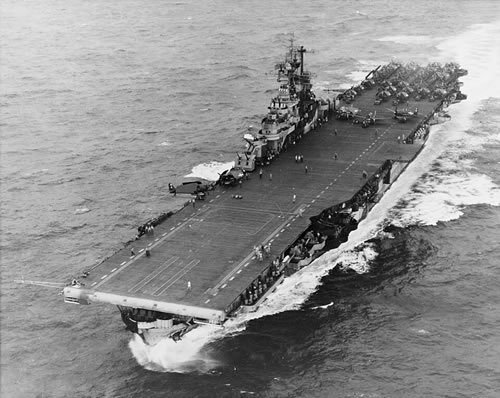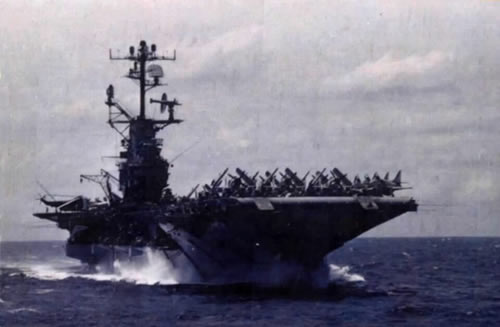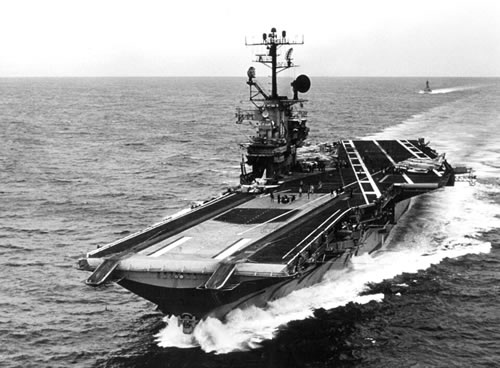
The USS Intrepid (CV-11), dramatically known as "The Fighting Age," is an Essex-class aircraft carrier that served as one of the most resilient and legendary warships in the U.S. Navy. Commissioned in August 1943, she played an indispensable role in the Pacific theater of World War II, participating in major campaigns like the Marshall Islands, Truk, and the monumental Battle of Leyte Gulf. The Intrepid earned a reputation for near-supernatural survival; despite being struck by a torpedo and directly hit by four different Japanese kamikaze suicide planes, her damage-control crews kept patching her up and sending her back into the fight. After WWII, her storied career continued as she was modernized to serve in both the Cold War and the Vietnam War, and she was even selected by NASA as the primary recovery vessel for astronauts during the Mercury and Gemini space missions.
Decommissioned in 1974, the battle-scarred carrier was destined for the scrap heap until real estate developer Zachary Fisher spearheaded a campaign to rescue her. In 1982, she opened to the public as a floating museum and has since become a world-renowned National Historic Landmark permanently moored at Pier 86 on the Hudson River in New York City, New York. Today, the Intrepid Museum stands as a massive educational complex, boasting a diverse fleet of historically significant aircraft parked right on her flight deck. In addition to her own naval legacy, the Intrepid acts as a spectacular host to history, housing the space shuttle Enterprise inside a dedicated pavilion on deck, and exhibiting the nearby USS Growler, the only intact strategic missile submarine open to the public in the United States.