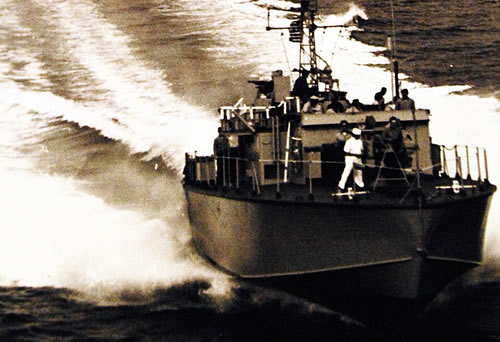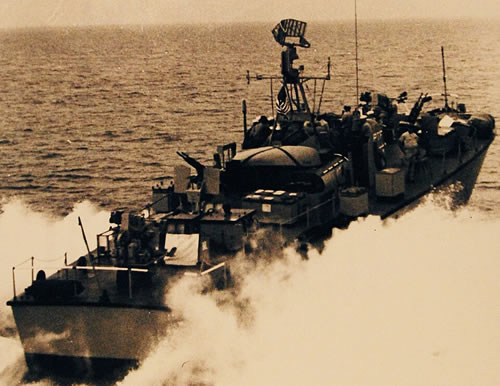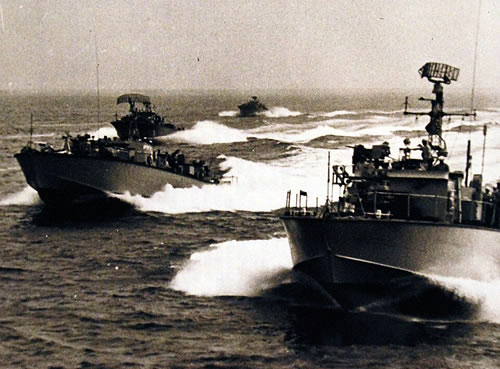
PTF-17 is a rare Fast Patrol Torpedo boat that represents the generation of high-speed "brown water" combat craft developed for naval special warfare during the Vietnam War. Built in 1967 under license by John Trumpy & Sons in Annapolis, Maryland, the vessel was constructed to a successful Norwegian design known as the Nasty class. Featuring a lightweight, double-planked mahogany hull and powered by two monstrous 3,100-horsepower Napier Deltic diesel engines, the 80-foot boat could slice through coastal waves at a blistering 38 knots. Rushed into theater to support Operation 34A and Military Assistance Command, Vietnam – Studies and Observations Group (MACV-SOG), PTF-17 was heavily armed with a 40mm Bofors gun on the stern, twin 20mm cannons, and a forward "piggyback" 81mm mortar/50-caliber machine gun configuration designed for aggressive, hit-and-run coastal raids and the clandestine insertion of U.S. Navy SEAL teams.
Following the end of the conflict, the high maintenance costs and specialized nature of these high-performance aluminum-and-wood vessels led the Navy to retire the fleet, and by 1981, nearly all of its sister ships had been scrapped or sunk as targets. PTF-17 stands as the proud, solitary survivor of the 20 American Nasty-class hulls. In 1979, the boat was acquired by the Buffalo and Erie County Naval & Military Park in Buffalo, New York, where it was permanently put on dry display alongside the heavy cruiser USS Little Rock and destroyer USS The Sullivans. Today, the meticulously preserved craft serves as a vital historical artifact and monument to the elite crews of the "Mosquito Fleet" and Naval Special Warfare forces who operated in the treacherous riverine networks of Southeast Asia.