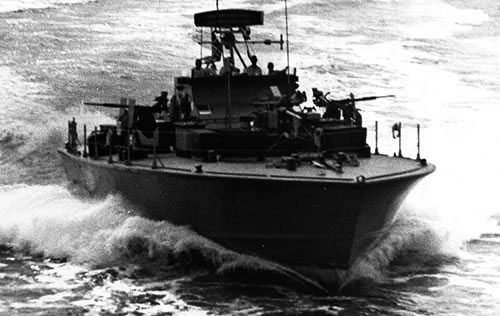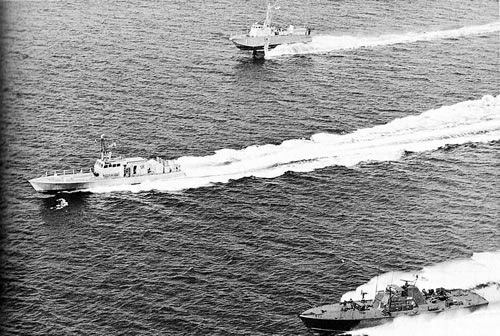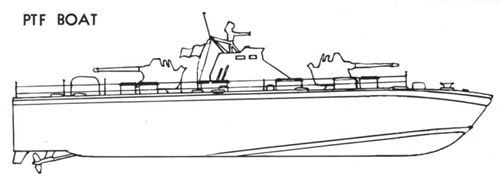
Commissioned in 1962, PTF-3 (Patrol Torpedo Fast) was an 80-foot fast patrol boat built by Westermoen Båtbyggeri in Mandal, Norway, as the first of twenty "Nasty-class" vessels used by the United States Navy. Nicknamed "Fast and Nasty," the craft was specifically engineered for high-risk, covert littoral warfare and maritime special operations. Powered by twin 3,100-horsepower Napier Deltic turbocharged diesel engines, PTF-3 could achieve blazing speeds of up to 38 knots (44 mph). It was heavily armed for close-quarters engagements, outfitted with a Bofors 40 mm gun, 20 mm cannons, heavy machine guns, and a "piggyback" 81 mm mortar to support shore bombardments and rapid-strike missions.
During the Vietnam War, PTF-3 was heavily deployed out of Da Nang, operating under MACV-SOG (Military Assistance Command, Vietnam – Studies and Observations Group) to conduct highly classified maritime raids against North Vietnamese coastal infrastructure. Notably, on July 31, 1964, PTF-3 participated in an amphibious commando assault on the North Vietnamese island of Hòn Mê—an action that directly triggered the historic Tonkin Gulf Incident and subsequent U.S. escalation in the region. After surviving nine years of intense combat and later serving as a Navy diver training vessel in Key West, Florida, the heavily weathered boat was saved from the scrap heap by volunteers in 2001. Today, PTF-3 is preserved as a static exhibit and living history museum at the DeLand Naval Air Station Museum in Florida, standing as the last surviving Nasty-class fast patrol boat of its fleet.