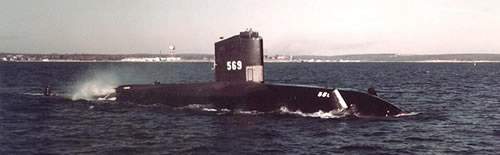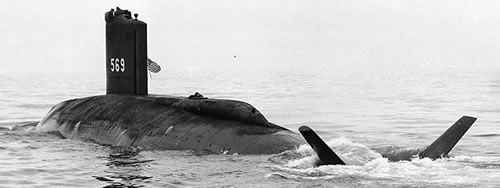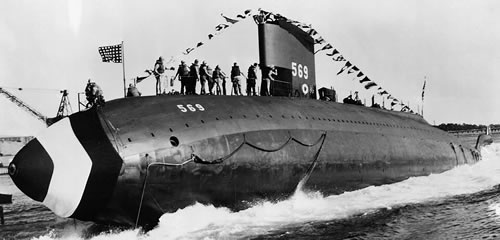
The USS Albacore (AGSS-569) is a pioneering research submarine designed by the United States Navy to test the boundaries of underwater speed and maneuverability. Commissioned in December 1953, the vessel was built with a revolutionary teardrop-shaped hull, radically departing from traditional fleet submarines that were optimized for surface cruising. Modeled after extensive hydrodynamic wind-tunnel and towing-basin testing, the Albacore served as an experimental laboratory on the high seas. While completely unarmed, her teardrop design, innovative cross-shaped tail control surfaces, and later contra-rotating propellers allowed her to reach unprecedented submerged speeds, setting a world record at the time and fundamentally changing submarine warfare by proving that true underwater agility was possible.
Decommissioned in 1972 after nearly two decades of invaluable engineering trials, the Albacore provided the foundational design blueprint for all modern American nuclear submarine classes that followed, including the Skipjack, Los Angeles, and Virginia classes. After spending years in the mothball fleet, the submarine was towed back to her birthplace in Portsmouth, New Hampshire, in 1984. Through a complex engineering feat, she was pulled out of the water, moved across a railway line, and permanently berthed in a dry basin. Today, designated as a National Historic Landmark, the vessel operates as the centerpiece of Albacore Park, allowing visitors to walk through its cramped interior and experience the historic ship that reshaped the global submarine landscape.