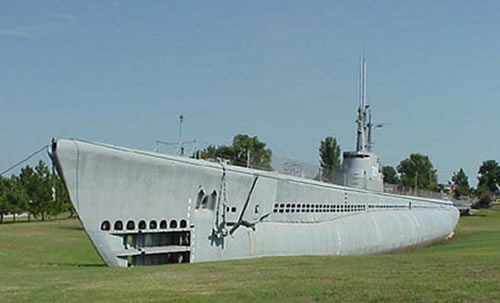
The USS Batfish (SS/AGSS-310) was a Balao-class diesel-electric submarine that achieved legendary status in the U.S. Navy for one of the most remarkable combat streaks in naval history. Commissioned in 1943, the 312-foot "silent hunter" operated in the Pacific theater during World War II, completing seven aggressive combat patrols. Batfish secured her place in military lore in February 1945 during her sixth patrol in the South China Sea. Over a staggering 76-hour window, the submarine intercepted and sank three separate Japanese submarines, a feat that devastated enemy picket lines and earned the ship a Presidential Unit Citation. By the end of the war, Batfish had sunk a total of 14 enemy vessels, earning nine battle stars for her highly distinguished wartime service.
Decommissioned after the war and briefly reactivated as a training vessel during the Cold War, Batfish was struck from the Naval Vessel Register in 1969. Thanks to the efforts of the Oklahoma Military Historical Federation, the submarine was saved from the scrap heap and embarked on a remarkable 1972 voyage, being towed up the Mississippi and Arkansas rivers to her final landlocked resting place. Today, Batfish is permanently displayed on dry land at the Muskogee War Memorial Park in Muskogee, Oklahoma. Serving as a living museum, the beautifully preserved vessel offers visitors a rare opportunity to step inside a decorated World War II fleet submarine, preserving the legacy of the Greatest Generation and the high-stakes reality of Pacific submarine warfare.