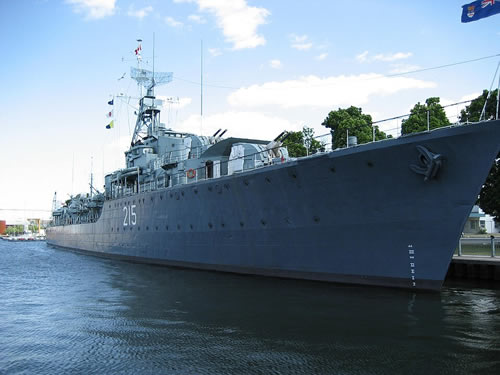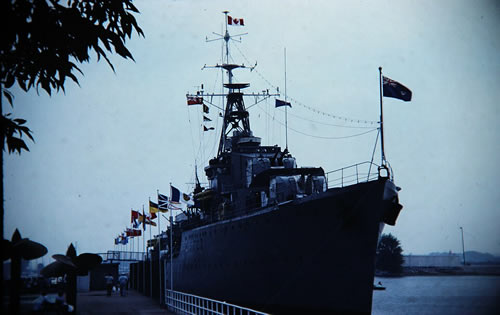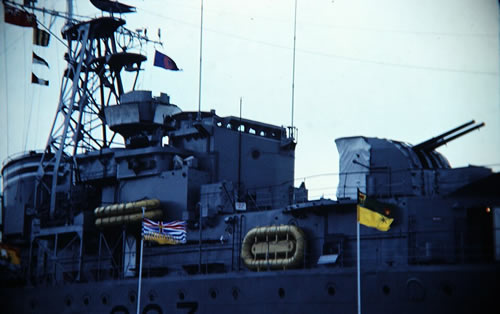
HMCS Haida (G63/215) is a legendary Tribal-class destroyer that holds the proud distinction of being known as the "Fightingest Ship in the Royal Canadian Navy." Commissioned in 1943 during the height of World War World II, the 377-foot warship served with immense distinction in the North Atlantic, the English Channel, and the Bay of Biscay. Haida became famous for her aggressive night actions against German naval forces, successfully sinking more enemy surface tonnage than any other Canadian ship. Her legendary wartime resume included sinking multiple German destroyers, a submarine, and numerous supply vessels, while also playing a vital role in providing naval gunfire support during the D-Day landings at Normandy. Later modernized, she served two tours during the Korean War, notably joining the "Trainbusters Club" by destroying enemy supply trains along the coast.
Decommissioned in 1963, Haida was saved from the scrap heap by a dedicated group of citizens and turned into a floating museum, eventually being designated a National Historic Site of Canada in 1984. She serves as a remarkably preserved time capsule, representing the pinnacle of Canadian naval achievements and standing as the last remaining Tribal-class destroyer in the world. Today, the historic warship is proudly docked at Pier 9 in Hamilton, Ontario, where she is managed by Parks Canada. She continues to honor the legacy of the thousands of sailors who walked her decks, serving as both a ceremonial flagship for the Royal Canadian Navy and a popular educational landmark for visitors.